

Moving Away from an Access-Based, Person-Dependent Collection Management System to Promote DX in Billing and Payment Management
Cikarang Japanese School
Industry: Education
Department: Administration
Category: Business Management
Customer Overview
Cikarang Japanese School (CJS) is located in Bekasi Regency, West Java, about 70 kilometers east of Jakarta, the capital of the Republic of Indonesia. Opened in April 2019 as a school operated by the Japanese School Maintenance Association (Foundation), it is an overseas educational institution accredited by the Japanese Ministry of Education, Culture, Sports, Science and Technology (MEXT). With extensive grounds and well-equipped facilities, the school provides high-quality education based on the Japanese national curriculum. Now, CJS has 250 students and 200 members in the association.
Pre-Implementation Challenges: Standalone Legacy System Caused Operational Stagnation

Cikarang Japanese School
Head of Administration
Mr. Niwa Satoshi
At its opening in 2019, following the example of the existing school Jakarta Japanese School (JJS), CJS implemented a membership and tuition fee management system (called as the "Tuition System") built with Microsoft Access. However, Mr. Niwa, the Head of Administration, reflects that this system posed many challenges in a modern work environment.
"The biggest challenge was that Access is a standalone PC system, which meant that only one person could use it, leading to person-dependency. The application's functions themselves were well-thought-out, but the system's architecture was the problem. After the COVID-19 pandemic, the need for work sharing among multiple people and remote access from anywhere had increased." (Mr. Niwa Satoshi)
Because the system could only be operated on a specific PC, important tasks such as billing and payment management were concentrated on a single person. The work became a black box, and on days when that person was unable to come to work, operations came to a complete halt. In addition, the process of issuing invoices to approximately 200 members was extremely time-consuming, involving manual printing and mailing for each one. Furthermore, inefficiencies such as double data management also occurred, with collection statuses being managed separately in Excel.
Reasons for Implementation: CELF, a Perfect Trio of Cloud, Usability, and Cost
To solve the challenges of person-dependency and operational inefficiency, the school decided to
revamp its
system. From several options, SCSK's no-code development platform "CELF" was chosen. Mr. Niwa
explains the reasons
as follows:
"There are three main reasons why we chose CELF. First, it is a cloud service (SaaS) that does not require server management. Second, its Excel-like UI is easy for anyone to understand. And third, the initial development cost could be kept low."(Mr. Niwa Satoshi)
Being a cloud service that can be used by multiple people from anywhere was an absolute requirement for eliminating person-dependency. In addition, the Excel-like usability that even staff unfamiliar with IT could use without resistance, and the ability to develop quickly while keeping costs down, were the deciding factors for implementing CELF.
IMG_system flow.png)
Implementation Process and Overcoming Challenges: Data Migration and Multilingual Support
Since the functional requirements of the existing Access system were clear, the replacement with
CELF proceeded
relatively smoothly. However, there were several hurdles to overcome in the process.
"The most difficult and careful task was accurately migrating the past data accumulated since the school's opening in 2019 to the new CELF system. We also had to cleanse the inconsistent data that remained from the old system at this time."(Mr. Niwa Satoshi)
Cikarang Japanese School
Administration Department
Ms. Hanada Miori
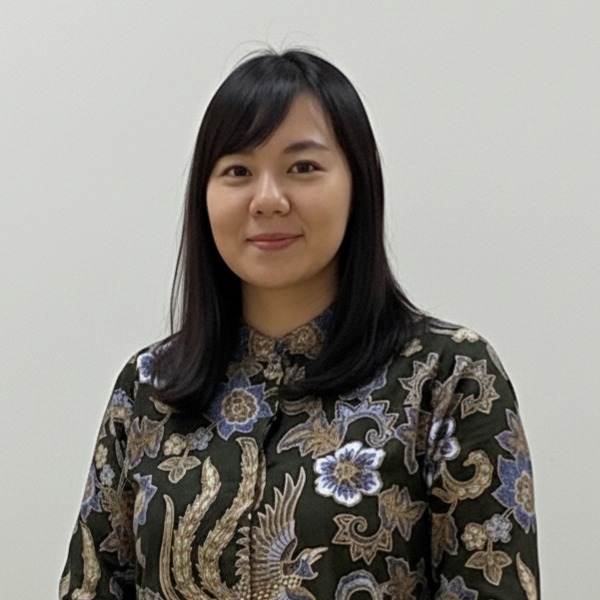
Furthermore, this system revamp was not just a simple replacement of functions, but also contains another important requirement of multilingual support. Ms. Hanada, who is deeply involved in on-site operations as a member of the administration and general affairs staff, also talks about the effects of this change.
"Previously, only Japanese staff used the system, but with the introduction of CELF, we proceeded with the Englishization (alphabetical notation) of the system so that local staff could also use it. This has created a system where local staff can directly consult with SCSKIDN, which has been a great help." (Ms. Hanada Miori)
By working closely together, CJS and SCSKIDN carefully addressed each of these challenges, including data migration, data cleansing, and multilingual support, to achieve a smooth transition to a stable new system.
Implementation Effects: Customers Talk About the "Dramatic Change" Brought by CELF
The replacement with CELF brought dramatic improvements to the long-standing challenges of billing and payment management. Voices of joy have been raised by the staff on the ground.
"The biggest effect is the bulk email sending function for invoices. The work that used to be done manually by mail can now be completed with a single click after the introduction of CELF, which has significantly reduced working hours." (Mr. Niwa Satoshi)
Not only was the time spent on issuing invoices overwhelmingly reduced, but the team's way of working itself also changed significantly.
"As a result of other staff members being able to share the payment work that I used to handle by myself, the overall operational efficiency of the school has improved, and my own workload has been greatly reduced." (Ms. Hanada Miori)

Cikarang Japanese School
Administration Department
Mr. Dody
In addition, Mr. Dody, an Indonesian staff member in charge of accounting, has realized the efficiency of daily data processing.
"CELF is most useful when dealing with a large amount of data. In handling the financial data of over 160 guardians, it used to take a long time manually, but after the introduction of CELF, I have been able to save a lot of time in data processing and aggregation." (Mr. Dody)
The introduction of CELF was not just a system revamp; it realized the DX of billing operations, improved the productivity of the entire team, and reduced the burden on each and every staff member, bringing great value.
Future Vision: Towards Accounting Integration and Data Utilization
At CJS, they are planning further business reforms with CELF as a platform.
"In the secondary development currently being planned, we are scheduled to link CELF with the existing accounting system. We want to automate the billing data that the accounting staff currently enters manually to improve the efficiency and accuracy of accounts receivable registration." (Mr. Niwa Satoshi)
In the future, they also envision a concept of automatically retrieving payment data from banks and automating payment reconciliation. If this is realized, the entire cycle from billing to accounting processing will be almost completely automated. Utilizing the data accumulated in CELF for statistical analysis and making use of it for decision-making in school management is also an important theme for the future.
Company Information
-
Cikarang Japanese School provides Japanese-curriculum education for expatriate and international
families in the Cikarang–Bekasi area. With English support and cultural exchange, students develop
strong academics, bilingual skills, and adaptability. Its modern Kota Deltamas campus offers safe,
well-equipped facilities fostering holistic growth.